9mm vs .45 ACP: What's the Difference and Which Is Right for You?
Posted by Tom Hennie on Oct 1st 2026
9mm vs .45 ACP What's Right For You - Differences, Recoil, Cost & More
If you are shopping for pistol ammunition, two cartridges you are almost guaranteed to encounter are 9mm Luger (9×19mm) and .45 ACP (45 Auto). Both have been used in handguns for generations, both are available in a wide variety of loads, and both remain popular choices for everything from range practice to personal-defense applications. At Sportsman Fulfillment, 9mm ammo and 45 ACP ammo are consistently two of our best sellers every month.
So, what actually separates 9mm from .45 ACP?
The answer goes well beyond bullet diameter. The two cartridges differ in typical bullet weight, velocity, recoil, ammunition cost, magazine capacity, and the types of handguns commonly chambered for them. Even within the same caliber, ammunition can perform differently depending on the bullet design, load, and intended purpose. SAAMI recognizes 9mm Luger and 45 Automatic as standardized cartridge designs, while ammunition manufacturers offer numerous loads within each cartridge.
That is why there is not necessarily one cartridge that is right for every shooter.
In this guide, we will compare 9mm vs .45 ACP from a practical ammunition-buying perspective. We will look at bullet size, recoil, velocity, magazine capacity, ammunition cost, range shooting, concealed carry, home defense, and what each cartridge may offer beginners. We will also explain why the specific ammunition load matters just as much as the caliber printed on the box.
By the end, you should have a much clearer understanding of the differences between 9mm and .45 ACP and, more importantly, know which characteristics matter most for the way you plan to shoot.
9mm vs .45 ACP at a Glance
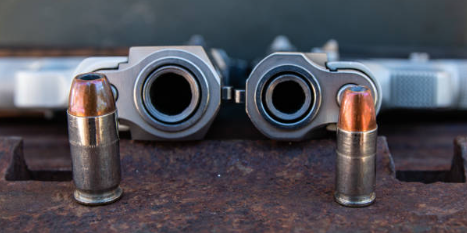
At first glance, the difference between 9mm and .45 ACP seems straightforward: 9mm uses a smaller-diameter bullet, while .45 ACP uses a larger one. But the differences extend well beyond bullet diameter.
The two cartridges generally use different bullet weights and velocities, produce different recoil characteristics, and are commonly paired with handguns offering different magazine capacities. Ammunition manufacturers also produce multiple loads within each caliber, so the exact performance of a particular cartridge can vary considerably.
The bullet weights shown above are representative rather than limits. Current factory ammunition includes multiple bullet weights and designs within both cartridges. For example, Winchester currently lists 9mm loads in 115, 124, and 147 grain configurations, while its .45 Auto offerings include 185 and 230 grain loads.
What This Table Doesn't Tell You
A comparison like this is useful for identifying the major differences, but it should not be treated as a universal scorecard.
For example, saying that 9mm generally produces less recoil does not mean every 9mm pistol will feel softer to shoot than every .45 ACP pistol. Firearm weight, size, grip design, operating system, ammunition load, and bullet weight can all influence the shooter's experience.
The same principle applies to velocity and ballistic performance. There is no single velocity or energy figure that represents every 9mm or every .45 ACP cartridge. Different manufacturers produce different loads for different purposes, which is why ammunition manufacturers are the appropriate source for the published ballistic data for a specific load.
Magazine capacity is also primarily a characteristic of the firearm, not the cartridge by itself. A particular pistol's dimensions and magazine design determine how many cartridges it can hold.
In other words, the table gives you the big picture. The rest of this guide explains why those differences matter when you are actually choosing ammunition. Now for us at Sportsman Fulfillment, we do tend to sell more 9mm pistols and 9mm ammo than 45 ACP, but that doesn't mean it's "better".
9mm Luger, also commonly called 9mm Parabellum or 9×19mm, is one of the most widely used handgun cartridges in the world. Its relatively compact dimensions, broad ammunition selection, manageable recoil, and compatibility with a huge variety of pistols have made it a staple for recreational shooters, competitive shooters, law enforcement, military users, and civilian firearm owners.
Today, when someone simply says they are looking for "9mm ammo," they are almost always referring to 9mm Luger (9×19mm).
A brief history of 9mm
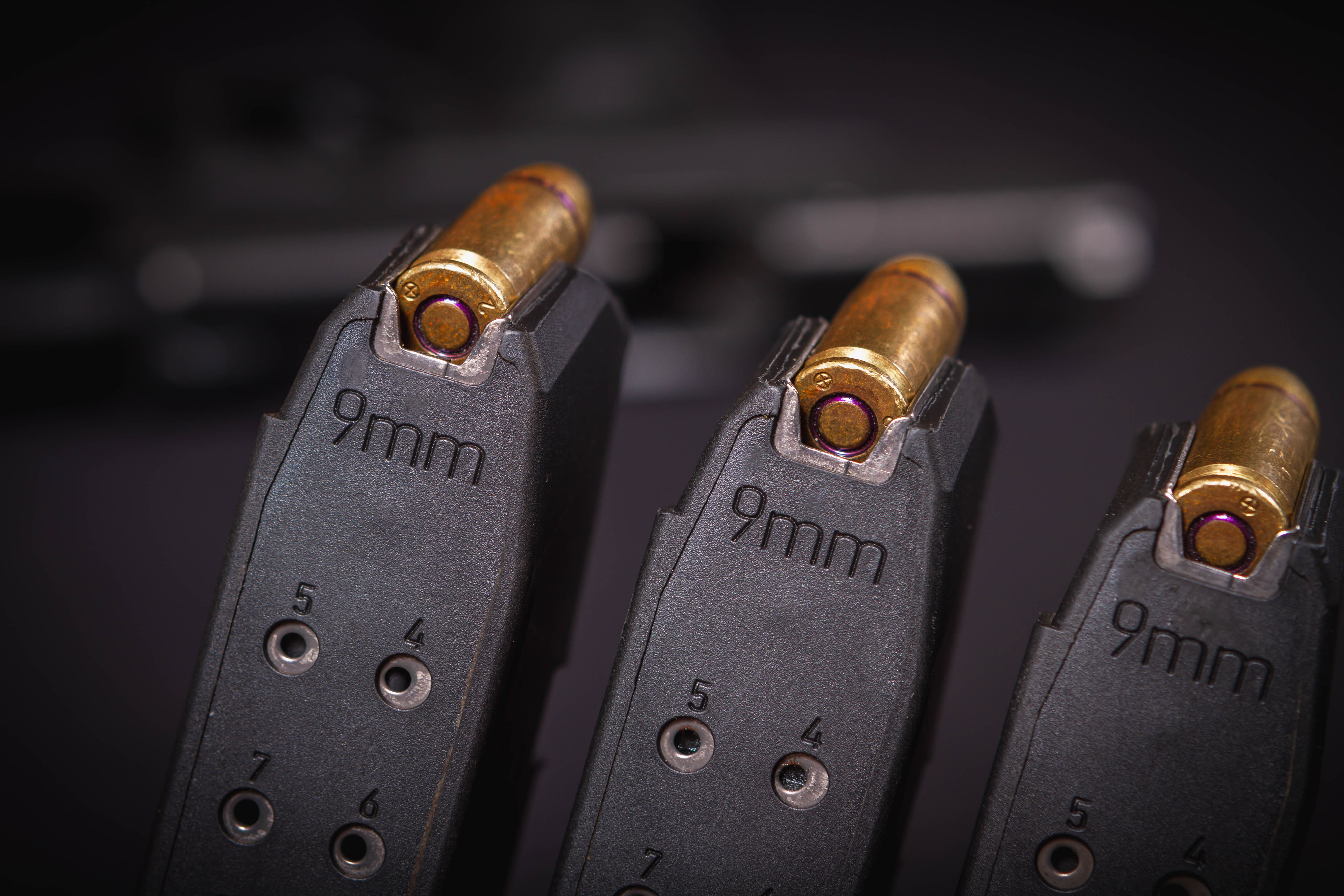
The history of 9mm is closely connected to German firearms designer Georg Luger and Deutsche Waffen- und Munitionsfabriken (DWM). The cartridge was developed for the Luger pistol in the early 1900s, and 9mm Parabellum Lugers were being produced by 1904. The cartridge subsequently became widely adopted and eventually grew into one of the world's most prominent military and service-pistol cartridges.
Its success was helped by a combination of practical characteristics. The cartridge could provide useful handgun performance while remaining relatively compact, allowing manufacturers to build pistols with substantial ammunition capacity without requiring an unusually large handgun.
That combination has remained one of 9mm's defining characteristics more than a century later.
Common 9mm bullet weights
One of the advantages of shopping for 9mm ammunition is the sheer variety of available loads. While there are many specialized options, some of the most common bullet weights you'll encounter include:
- 115 grain : A very common choice for practice and general-purpose ammunition.
- 124 grain : Another extremely common weight, available in both practice and defensive loads.
- 147 grain : A heavier 9mm bullet commonly found in both training and specialized loads.
The grain number refers to the weight of the projectile, not the overall weight of the cartridge. A grain is a unit of weight commonly used for bullets and ammunition. Bullet weight is only one part of a cartridge's performance. Bullet construction, powder charge, velocity, and the intended purpose of the ammunition can all change how a particular load performs. That is why two boxes of 9mm ammunition with different bullet weights, or even the same bullet weight, should not automatically be expected to perform identically. On our Sportsman Fulfillment site we sell mostly 115 grain and 124 grain for 9mm, those are our two best sellers by far, but we do still see some sales for 147 grain 9mm, but it is far less common.
Where 9mm is commonly used
The versatility of 9mm is one of the biggest reasons it remains so popular. It is commonly available for:
Range shooting and training:
9mm is particularly popular for practice because there is a tremendous selection of full-metal-jacket (FMJ) ammunition designed for recreational shooting and training.
Competition Shooting:
Many competitive handgun platforms are available in 9mm, and ammunition manufacturers offer loads specifically designed around different competitive shooting applications.
Concealed carry:
The cartridge's relatively compact dimensions make it possible to build pistols that balance ammunition capacity, firearm size, and shootability. There is also an extensive selection of defensive 9mm ammunition.
Duty and service use:
9mm has a long history as a military and law-enforcement cartridge and remains widely represented among modern service pistols.
General-purpose handgun use:
Because 9mm pistols and ammunition are available in such a wide range of configurations, the cartridge can serve many different roles without requiring a specialized firearm for every application.
Why 9mm Has Become So Popular
The continued popularity of 9mm isn't based on one specification. Instead, it comes from the combination of several characteristics. A typical 9mm pistol can be relatively compact while offering substantial magazine capacity. Shooters can choose from a huge variety of bullet weights and ammunition types, and 9mm practice ammunition is widely available. The cartridge also generally produces less recoil than .45 ACP in comparable handgun configurations.
That combination gives shooters a lot of flexibility.
For someone comparing 9mm with .45 ACP, this is an important distinction: 9mm's appeal isn't simply that it is a smaller cartridge. Its popularity comes from how its size, ammunition selection, recoil characteristics, capacity, and overall versatility work together. At Sportsman Fulfillment, many of our customers are purchasing 9mm ammo for range days, practice, and training, but of course there is still customers making purchases for self defense rounds and concealed carry ammo we carry it all.
The next question is how those characteristics compare with .45 ACP, and that starts with understanding the cartridge on the other side of the comparison.
What Is .45 ACP?
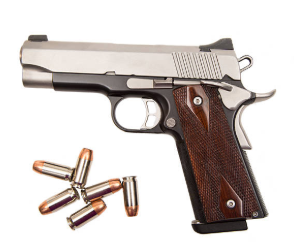
.45 ACP, commonly referred to as .45 Auto, is a centerfire handgun cartridge developed in the early 20th century for use in semi-automatic pistols. It is best known for its association with the Colt M1911, but its history and modern applications extend well beyond that iconic handgun.
Where 9mm became known for combining a relatively compact cartridge with broad capacity and versatility, .45 ACP built its reputation around a larger, heavier projectile and a long history of military, law-enforcement, competition, and civilian use.
That history is a major reason .45 ACP remains one of the most recognizable pistol cartridges today.
A brief history of .45 ACP
The development of .45 ACP is closely tied to firearms designer John M. Browning and the development of a new semi-automatic military pistol for the United States.
During the early 1900s, the U.S. military was evaluating handgun designs and cartridge combinations. Browning's work ultimately led to the development of the .45 ACP cartridge and the pistol that would become the Colt M1911. The M1911 was adopted by the U.S. military in 1911 and went on to become one of the most historically significant American service pistols. The cartridge's military history continued for decades, helping establish .45 ACP as a major American handgun cartridge.
But historical significance isn't the only reason .45 ACP remains popular. The cartridge continues to be offered in a wide variety of modern handguns and ammunition loads, giving today's shooters plenty of options.
Common .45 ACP bullet weights
Compared with 9mm, .45 ACP ammunition generally uses heavier bullets. Common examples include:
- 185 grain : A lighter .45 ACP projectile found in various factory loads.
- 200 grain : Another commonly encountered bullet weight, including specialized and competition-oriented ammunition.
- 230 grain : The classic .45 ACP bullet weight and one of the most commonly associated with the cartridge.
As with 9mm, bullet weight alone does not tell you everything about how a particular load will perform.
Two .45 ACP cartridges can have the same bullet weight but use different bullet constructions, powder charges, velocities, and designs. A full-metal-jacket load intended for range practice is designed differently from a jacketed hollow-point load intended for a defensive application. Similar to 9mm, at Sportmsan Fulfillment we tend to sell more of the lighter .45 ACP ammo being the 185 grain and 200 grain, these just tend to be our more popular sellers.
This is an important concept when comparing 9mm and .45 ACP: the cartridge name tells you the basic cartridge, but the ammunition load tells you much more about how that particular round is designed to perform.
Where .45 ACP is commonly used
Although .45 ACP has a strong military history, modern shooters use it for a variety of purposes.
Range shooting and training:
.45 ACP is widely available in FMJ ammunition intended for recreational shooting and practice. Shooters who enjoy larger-caliber handguns may appreciate the cartridge's distinctive recoil and shooting characteristics.
Shooting Competition:
.45 ACP continues to have a place in competitive shooting, particularly in disciplines and divisions where .45-caliber pistols are commonly used.
45 ACP Concealed carry:
Compact and subcompact .45 ACP pistols are available for shooters who prefer the cartridge for personal-defense applications. The tradeoffs can include greater firearm size, recoil, and ammunition capacity compared with many comparable 9mm platforms.
Home defense:
.45 ACP is available in a wide selection of modern defensive ammunition. As with any defensive cartridge, ammunition selection, firearm reliability, and the shooter's ability to operate the firearm effectively are important considerations.
While many of our customers are buying .45 ACP ammo for range days and practice, we still get some shoppers telling us they carry 45 ACP or even use it as their home defense caliber. Some of our favorite customer stories are how they tell us they bought metal shooting targets from us and shoot it on their property all the time using .45 ACP for some fun plinking.
Why .45 ACP Has Stayed Popular
The continued popularity of .45 ACP is partly a product of its history, but it isn't only nostalgia.
The cartridge offers a combination of larger bullet diameter, heavier common bullet weights, and a long-established selection of firearms and ammunition. Modern manufacturers continue to produce .45 ACP in everything from basic range ammunition to specialized loads.
At the same time, those characteristics come with tradeoffs. A larger, heavier cartridge can affect the size and weight of the firearm, ammunition capacity, recoil, and cost of practice ammunition.
Those tradeoffs are exactly what make the 9mm vs .45 ACP comparison interesting.
Rather than asking whether one cartridge is universally superior, it makes more sense to ask what you value most in a handgun and its ammunition. A shooter who prioritizes capacity, lower recoil, and economical practice may look at the comparison differently from someone who specifically prefers a larger, heavier projectile and the shooting characteristics of a .45 ACP pistol.
9mm vs .45 ACP: Bullet Size
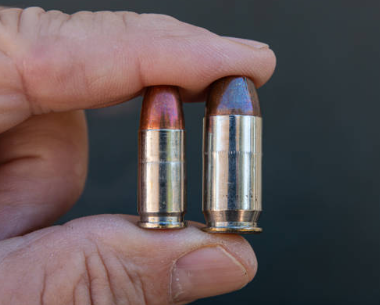
The most obvious difference between 9mm and .45 ACP is right there in their names: the diameter of the bullet.
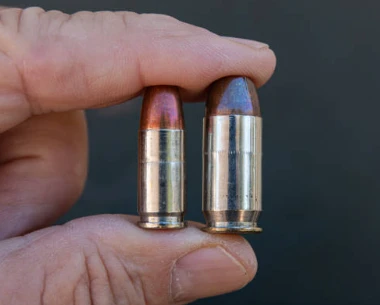
A standard 9mm Luger projectile has a nominal diameter of approximately .355 inches, while a .45 ACP projectile has a nominal diameter of approximately .451 inches. That makes the .45 ACP projectile substantially wider than a typical 9mm projectile.
The difference becomes easier to visualize when the two are placed side by side:
What Does Bullet Diameter Actually Mean?
Bullet diameter refers to the width of the projectile itself. A .45 ACP bullet therefore has a substantially larger cross-sectional diameter than a 9mm bullet.
However, bullet diameter is only one characteristic of a cartridge.
Ammunition performance also depends on factors such as bullet weight, construction, velocity, firearm design, and the intended purpose of the ammunition. For example, a manufacturer can produce multiple 9mm loads using different bullet weights and bullet designs, just as it can produce multiple .45 ACP loads.
This is why comparing two cartridges based solely on the diameter printed on the ammunition box can give an incomplete picture.
Why Is the .45 ACP Bullet Heavier?
The larger diameter of a .45 ACP projectile gives manufacturers the ability to use a larger and heavier projectile while remaining within the cartridge's design parameters.
Common .45 ACP ammunition includes bullets weighing 185, 200, and 230 grains, while common 9mm ammunition includes 115, 124, and 147 grain projectiles. These are representative examples rather than the only bullet weights available.
Bullet weight is important because it interacts with velocity and bullet construction to influence how a particular load behaves. A heavier projectile traveling at a lower velocity can have very different characteristics from a lighter projectile traveling at a higher velocity.
That distinction becomes especially important when we get to the next parts of this comparison.
Does a Bigger Bullet Automatically Make .45 ACP Better?
Not necessarily.
It is tempting to look at the larger diameter of a .45 ACP bullet and assume that the larger projectile automatically makes it the better cartridge. But ammunition selection is not that simple.
A larger projectile can be one desirable characteristic, while a smaller cartridge can offer other characteristics that a particular shooter values. For example, 9mm commonly provides higher magazine capacity and generally lower recoil in comparable handgun configurations.
Modern ammunition also complicates the comparison further. Different bullet designs are engineered for different purposes, and the performance of a specific load should be evaluated using the manufacturer's published specifications rather than assuming that every cartridge of the same caliber performs identically.
How Bullet Size Fits Into the Bigger Picture
If you are simply looking at the physical dimensions of the projectiles, .45 ACP clearly has the larger bullet.
But if you are trying to decide which ammunition makes more sense for your particular firearm and shooting needs, bullet diameter should be considered alongside recoil, velocity, ammunition cost, magazine capacity, firearm size, and load design.
The larger bullet of .45 ACP contributes to the cartridge's distinctive characteristics, while the smaller 9mm projectile allows the cartridge to maintain a compact overall package with a wide variety of load options.
So, bullet size is an important difference between 9mm and .45 ACP, but it is only the beginning of the comparison.
9mm vs .45 ACP: Recoil
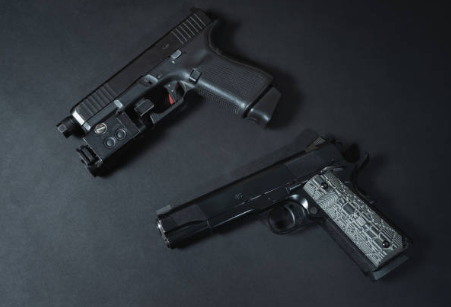
Recoil is one of the most noticeable differences between 9mm and .45 ACP. In general, 9mm produces less recoil than .45 ACP when comparing similar handguns and ammunition. However, the cartridge itself isn't the only factor that determines how a pistol feels when fired. I have personally shot both types of ammo for decades, and while 9mm generally has less recoil, I sometimes find 45 ACP to be slightly more accurate, but that could be due to how I am holding the pistol, and plenty of other reasons. Let us know your thoughts.
Firearm weight, size, operating system, grip design, and ammunition load can all affect perceived recoil. A lightweight compact pistol, for example, can feel considerably different from a heavier full-size pistol chambered in the same cartridge.
Why Does .45 ACP Generally Have More Recoil?
Common .45 ACP ammunition uses substantially heavier bullets than common 9mm ammunition. That difference in projectile weight contributes to the recoil characteristics of the two cartridges. In comparable firearms, shooters will generally experience a more pronounced recoil impulse from .45 ACP.
9mm's lighter common bullet weights and typical load characteristics generally produce a more manageable recoil impulse, which is one reason the cartridge is so widely used for training and recreational shooting.
Does More Recoil Mean Less Accuracy?
Not necessarily. Recoil doesn't automatically determine how accurately a firearm can shoot. Mechanical accuracy, ammunition quality, firearm design, sights, and the shooter's technique all play important roles.
Where recoil can matter is firearm control. A shooter who finds a particular cartridge comfortable may be able to practice longer and control the firearm more easily during repeated shots. Another shooter may have no difficulty managing the recoil of .45 ACP.
This makes recoil partly a matter of the individual shooter and the specific firearm, not just the caliber printed on the ammunition box.
9mm vs .45 ACP Recoil: The Practical Difference
The simplest takeaway is that 9mm generally offers a lighter recoil experience, while .45 ACP generally produces a more substantial recoil impulse. Neither characteristic makes one cartridge universally right for every shooter.
For someone deciding between the two, the more useful question is how the recoil of the specific firearm and ammunition combination affects their ability to shoot comfortably and maintain control.
9mm vs .45 ACP: Velocity and Ballistics
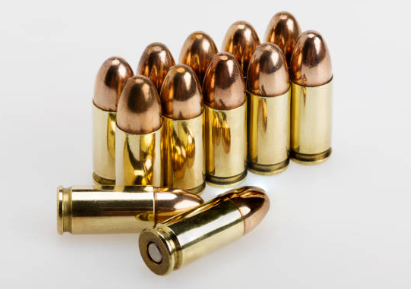
Velocity is another major difference between 9mm and .45 ACP. In general, 9mm uses lighter bullets traveling at higher velocities, while .45 ACP uses heavier bullets at lower velocities.
That doesn't mean every 9mm load is faster than every .45 ACP load. Ammunition manufacturers offer a wide range of bullet weights and load specifications, so the best way to compare ballistics is to look at specific factory ammunition rather than assigning one universal velocity to an entire caliber.
For example, Federal's published handgun data includes a 115-grain 9mm load at 1,180 feet per second (fps), a 124-grain load at 1,150 fps, and a 147-grain load at 1,000 fps under its specified test conditions.
Current factory ammunition also illustrates the range of options available. Winchester lists 9mm ammunition in 115-, 124-, and 147-grain configurations, while its .45 Auto lineup includes 185- and 230-grain loads.
Why Does 9mm Have Higher Velocity?
The smaller, lighter projectile used by typical 9mm loads can be propelled at relatively high velocity while maintaining the cartridge's compact dimensions.
.45 ACP takes a different approach, commonly using a substantially heavier projectile at a lower velocity.
What About Energy?
Muzzle energy is another specification often used when comparing ammunition. It is calculated from projectile weight and velocity, which means neither caliber has a single universal energy figure.
A heavier bullet does not automatically mean greater muzzle energy, just as a higher velocity does not automatically mean greater energy. The specific combination of projectile weight and velocity determines the published energy for a particular load.
More importantly, muzzle energy should not be treated as a complete measure of how effective a particular ammunition load will be for a given application. Bullet construction, penetration, expansion, firearm characteristics, and other factors can also matter.
This is particularly important when comparing defensive ammunition. A 9mm or .45 ACP label tells you the cartridge, but it does not tell you everything about the bullet inside the cartridge.
For a general comparison, think of the two cartridges this way:
9mm: smaller, lighter projectile + generally higher velocity.
.45 ACP: larger, heavier projectile + generally lower velocity.
Neither description tells the entire story, but it explains one of the fundamental design differences between the two cartridges.
When shopping for ammunition, always look at the specifications for the specific load rather than assuming every round of the same caliber will perform identically. Manufacturers publish velocity and energy figures for individual loads because those characteristics can change with bullet weight, ammunition design, and test conditions.
The next difference is much easier to understand from a practical standpoint: magazine capacity.
9mm vs .45 ACP: Magazine Capacity
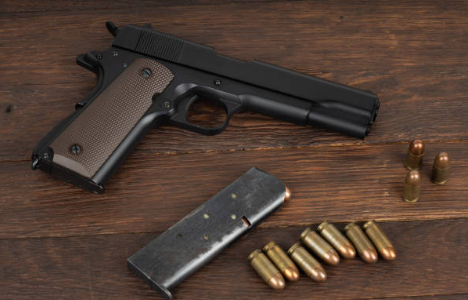
Magazine capacity is one of the clearest practical differences between 9mm and .45 ACP.
Because a 9mm cartridge is narrower than a .45 ACP cartridge, a magazine designed around 9mm can generally accommodate more cartridges within a similar amount of space. As a result, 9mm pistols commonly offer higher magazine capacities than comparable .45 ACP pistols.
However, capacity is a characteristic of the firearm and magazine design, not an absolute characteristic of the cartridge.
Why Does 9mm Usually Hold More Rounds?
The simple explanation is width.
A magazine has limited physical space inside its body. Since .45 ACP cartridges are wider, fewer of them can generally fit across the same magazine width than 9mm cartridges.
That difference becomes especially noticeable in modern double-stack pistols, where manufacturers design the magazine and grip around a specific cartridge.
For example, a full-size 9mm pistol may commonly hold somewhere around 15–17 rounds, while comparable .45 ACP pistols often hold fewer. Exact capacity varies significantly by firearm, magazine, and applicable regulations.
Magazine Capacity Isn't Everything
A higher-capacity magazine can reduce the frequency of reloads, but capacity shouldn't be viewed in isolation.
The size of the firearm, grip dimensions, magazine size, weight, and the shooter's ability to comfortably operate the pistol all matter. A larger magazine may provide additional capacity but can also affect the size and shape of the grip or the overall package.
There are also plenty of exceptions to the general 9mm-versus-.45 pattern. Some .45 ACP pistols offer relatively high capacities, while some compact and subcompact 9mm pistols have considerably smaller magazines than full-size models.
The comparison is therefore best understood as a general trend rather than a rule.
9mm generally gives manufacturers more room to balance ammunition capacity with a compact handgun design, while .45 ACP generally requires more magazine space per cartridge.
If capacity is an important factor in your decision, compare the actual pistols, not just the calibers. The firearm's dimensions and magazine specifications will tell you much more than the cartridge designation alone.
9mm vs .45 ACP: Ammunition Cost
For many shooters, ammunition cost is one of the most practical differences between 9mm and .45 ACP.
In general, 9mm practice ammunition tends to cost less per round than comparable .45 ACP ammunition. That difference can become significant for someone who shoots regularly, particularly during high-volume range sessions.
Both cartridges have extensive selections of full-metal-jacket (FMJ) ammunition designed for target shooting and training. Manufacturers such as Winchester offer mainstream 9mm and .45 Auto FMJ options specifically suited to range use.
Why Does 9mm Usually Cost Less Than 45 ACP?
9mm is produced in enormous quantities and is used across a very large range of handguns and shooting applications. That high demand and broad production base contributes to a large selection of economical practice ammunition.
.45 ACP is also widely available, but the cartridge generally costs more per round than comparable 9mm range ammunition.
The difference can become more noticeable when buying ammunition in larger quantities.
A good comparison is : 9mm FMJ vs. .45 ACP FMJ rather than: the cheapest 9mm available vs. the most expensive .45 ACP available.
9mm vs .45 ACP Cost: The Practical Takeaway
If ammunition budget is an important consideration, 9mm generally has the advantage for routine practice and high-volume shooting.
That doesn't necessarily make it the right cartridge for every shooter. Someone who prefers .45 ACP may consider the additional ammunition expense worthwhile based on the firearm and shooting characteristics they prefer.
The important question is how often you plan to shoot.
If you are an occasional shooter purchasing a box of ammunition a few times a year, the price difference may have relatively little impact on your overall shooting budget. If you shoot frequently, however, ammunition cost can become a major part of the ownership equation.
For the most accurate comparison, check the current prices for comparable 9mm and .45 ACP loads rather than relying on a fixed price listed in an article. Ammunition pricing, promotions, and availability can change over time.
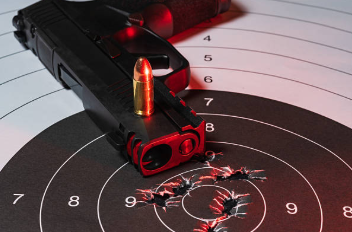
9mm vs .45 ACP for Range Shooting
For recreational shooting and training, both 9mm and .45 ACP are excellent options, but they offer noticeably different range experiences.
For many shooters, 9mm is the more economical choice for frequent practice. It is widely available in FMJ range ammunition, generally produces less recoil than .45 ACP in comparable handguns, and is commonly chambered in pistols with larger magazine capacities. Those factors can make 9mm particularly practical for high-volume training.
Why Choose 9mm for the Range?
9mm's combination of availability, relatively low recoil, and ammunition cost makes it a popular choice for regular range sessions.
If you're working on fundamentals such as grip, trigger control, sight alignment, or drawing and firing consistently, being able to shoot a large number of rounds without excessive fatigue can be useful. The lower cost of typical 9mm FMJ ammunition can also make frequent practice more affordable.
For shooters who train regularly, that combination can be a significant consideration.
Why Choose .45 ACP for the Range?
The range is also where .45 ACP can be especially enjoyable for someone who simply prefers shooting the cartridge.
The larger cartridge produces a different recoil impulse and shooting experience, and many shooters specifically enjoy the feel and history associated with .45 ACP pistols. The cartridge also has a long-standing presence in competition and recreational shooting.
If you already own a .45 ACP pistol, there is also an obvious benefit to practicing with the same firearm and ammunition type you intend to use for your particular application.
Which Should You Practice With?
Consistent, quality practice matters more than choosing a caliber simply because someone says it is the “best.”
9mm vs .45 ACP for Concealed Carry
Both 9mm and .45 ACP are available in handguns designed for concealed carry, but the two cartridges can lead manufacturers toward somewhat different combinations of firearm size, capacity, and weight.
For many concealed-carry pistols, 9mm allows manufacturers to offer a relatively compact handgun while maintaining a comparatively high magazine capacity. .45 ACP pistols can also be compact, but accommodating the larger cartridge can affect the dimensions and capacity of the firearm.
That doesn't make one cartridge universally better for concealed carry. It means the shooter may encounter different tradeoffs depending on the pistol they choose.
Size and Weight Matter
When carrying a handgun regularly, the characteristics of the firearm can be just as important as the ammunition.
A pistol's overall dimensions, unloaded weight, grip size, and slide thickness can affect how easily it can be carried and concealed. The same caliber can also be available in firearms ranging from small subcompact models to larger full-size pistols.
This is why it makes more sense to compare specific handguns chambered in each cartridge rather than assuming that every 9mm is smaller than every .45 ACP.
Capacity Can Be a Consideration
As discussed earlier, 9mm pistols commonly offer higher magazine capacities than comparable .45 ACP pistols because the smaller cartridge requires less space within the magazine.
For concealed-carry shoppers, that can create a practical tradeoff between firearm size and capacity. A compact pistol may sacrifice some capacity compared with a larger model, regardless of caliber.
Magazine capacity is also subject to applicable laws and regulations, which vary by location.
Recoil and Shootability
Recoil is another consideration.
In comparable firearms, 9mm generally produces less recoil than .45 ACP. That difference may be noticeable when shooting a small carry pistol, where the firearm's reduced weight can make recoil feel more pronounced.
At the same time, a shooter's individual experience matters. Some people may find a particular .45 ACP pistol comfortable and controllable, while another shooter may strongly prefer the characteristics of a 9mm handgun.
The actual firearm should therefore be part of the decision, not just the cartridge.
Ammunition Selection
Both cartridges have extensive selections of ammunition, including loads designed for practice and loads intended for defensive applications.
For someone who carries a handgun, it is particularly important to follow the firearm manufacturer's instructions and use ammunition appropriate for that firearm. It is also useful to understand the difference between inexpensive practice ammunition and specialized defensive loads rather than treating all ammunition within a caliber as interchangeable in purpose.
The Concealed-Carry Tradeoff
For concealed carry, the comparison often comes down to several characteristics working together:
- 9mm: Commonly available in compact pistols, generally lower recoil, broad ammunition selection, and generally higher capacity in comparable designs.
- .45 ACP: Available in many compact carry pistols, larger projectile diameter, generally greater recoil, and generally lower capacity in comparable designs.
Neither cartridge eliminates the need to evaluate the actual handgun. A firearm that fits the shooter's hand, can be carried appropriately, and can be operated safely and effectively is a more meaningful consideration than choosing a caliber based on reputation alone.
For ammunition shoppers, the next question is how these same differences apply when evaluating 9mm and .45 ACP for home defense.
9mm vs .45 ACP for Home Defense
Both 9mm and .45 ACP are widely available in handgun platforms intended for defensive use, and both have extensive selections of purpose-built ammunition. When comparing them for home defense, however, the question shouldn't simply be which caliber is "more powerful."
The more useful comparison is how the firearm, ammunition, shooter, and intended environment work together.
When evaluating ammunition for a defensive application, several characteristics deserve attention:
- Reliable function: The ammunition should be appropriate for the firearm and function reliably in that particular firearm.
- Bullet design: Defensive loads are generally designed differently from basic range ammunition.
- Published performance: Look at the manufacturer's information for the specific load rather than assuming every round within a caliber performs the same way.
- Firearm compatibility: Always use ammunition designated by the firearm manufacturer for that firearm. SAAMI specifically advises matching ammunition to the markings and specifications of the firearm.
- Practical shootability: The shooter should be able to operate and control the firearm effectively.
The basic tradeoffs we've discussed throughout this guide still apply.
9mm commonly offers lower recoil, higher capacity in comparable pistols, a broad selection of defensive ammunition, and generally lower ammunition costs.
.45 ACP offers a larger-diameter projectile and a long history of use in defensive and service handguns, but comparable pistols will generally have lower capacity and more recoil.
9mm vs .45 ACP: Pros and Cons
By this point, the major differences between 9mm and .45 ACP should be clear. Here is a quick summary of the practical tradeoffs.
The advantages of one cartridge can be disadvantages depending on what a particular shooter values. Someone who shoots several hundred rounds regularly may place considerable importance on ammunition cost and recoil. Someone else may care more about the characteristics of a particular .45 ACP handgun or simply prefer the way it shoots.
The important thing is to identify which characteristics matter most for your intended use rather than trying to declare a universal winner.
That brings us to the question most readers came here to answer: Which cartridge is right for you?
So, Which Is Right for You?
After comparing 9mm and .45 ACP, the biggest takeaway is that there is no single answer that applies to every shooter. Both cartridges have proven themselves across decades of military, law enforcement, competition, recreational, and civilian use. The better question is which characteristics matter most for the way you plan to shoot.
If lower recoil, higher magazine capacity, lower practice ammunition costs, and a wide selection of pistols and ammunition are important to you, 9mm offers those characteristics in a very broad range of firearms.
If you place more value on a larger-diameter projectile, the traditional .45 ACP platform, or simply prefer the way a .45 feels and shoots, .45 ACP offers those characteristics while accepting tradeoffs that can include greater recoil, lower capacity, and higher ammunition costs.
Your intended use also matters:
- Frequent range shooting: Ammunition cost, recoil, and availability can have a significant impact over hundreds or thousands of rounds.
- Concealed carry: Compare the actual firearm, not just the caliber. Size, weight, grip dimensions, capacity, and how comfortably you can control the pistol all matter.
- Home defense: Consider the complete combination of firearm, ammunition, reliability, safe storage, and your ability to operate the firearm safely and effectively.
- Competition or training: Recoil, capacity, ammunition cost, and the rules of the particular discipline may influence which cartridge fits your needs.
- General-purpose ownership: The availability of ammunition and the characteristics of the specific handgun you prefer may matter more than the caliber debate itself.
It is also worth remembering that 9mm and .45 ACP are categories of ammunition, not single performance specifications. Different bullet designs, loads, and manufacturers can produce substantially different results within the same caliber. When comparing ammunition, look beyond the caliber printed on the box and consider the specific load and its intended purpose.
Ultimately, choosing between 9mm and .45 ACP comes down to balancing the characteristics discussed throughout this guide. Understanding those differences gives you a better foundation for comparing individual firearms and ammunition rather than relying on the idea that one cartridge is universally better than the other.
Frequently Asked Questions About 9mm vs .45 ACP
Below is a list of questions we are constantly getting asked by customers about both 9mm and 45 ACP ammo. I figured, instead of constantly answering them individually, we would provide a Sportsman Fulfillment answer guide to our most commonly asked questions, by customers, about these ammunition types.
Is 9mm cheaper than .45 ACP?
Generally, yes. 9mm practice ammunition tends to cost less per round than comparable .45 ACP ammunition. The difference can become significant for shooters who practice frequently. Prices vary by manufacturer, bullet type, load, and market conditions, so it is best to compare similar ammunition rather than simply comparing the cheapest box of one caliber with a premium load of the other.
Does .45 ACP have more recoil than 9mm?
Generally, yes. When comparing similar handguns and ammunition, .45 ACP typically produces more noticeable recoil than 9mm. However, recoil is influenced by the firearm's weight, design, grip, operating system, and the specific ammunition load. A heavier pistol can also make either cartridge feel different than it would in a lightweight handgun.
Is 9mm or .45 ACP better for range shooting?
Both cartridges can work well for recreational shooting and training. 9mm is commonly used for high-volume practice because ammunition is widely available, generally less expensive, and typically produces less recoil. .45 ACP offers a different shooting experience and remains popular with shooters who enjoy the cartridge or already own a .45-caliber pistol. The firearm, ammunition cost, recoil, and shooting experience are all factors to consider.
Which has more magazine capacity, 9mm or .45 ACP?
9mm pistols generally have higher magazine capacities than comparable .45 ACP pistols. The reason is largely the smaller diameter of the 9mm cartridge, which allows manufacturers to fit more cartridges into a magazine of similar dimensions. Capacity ultimately depends on the specific firearm and gun magazine design, so individual pistol specifications should always be checked.
Is .45 ACP bigger than 9mm?
Yes. A .45 ACP projectile has a larger nominal diameter than a 9mm projectile. A 9mm bullet is approximately .355 inches in diameter, while a .45 ACP bullet is approximately .451 inches. Diameter is only one part of the comparison, however. Bullet weight, construction, velocity, and the specific ammunition load also affect how a cartridge performs.
What is the most common 9mm bullet weight?
Common 9mm factory ammunition includes 115-grain, 124-grain, and 147-grain bullets. Different weights and bullet designs are available for different purposes, including range shooting, competition, and defensive applications. The specific load, not simply the 9mm designation, determines the ammunition's published ballistic performance.
What is the most common .45 ACP bullet weight?
230 grains is one of the most common .45 ACP bullet weights, although factory ammunition is also available in weights such as 185 and 200 grains. Different bullet designs and loads can produce different velocities and ballistic characteristics, so the ammunition specifications should be checked when comparing individual products.
Can you use 9mm ammunition in a .45 ACP pistol?
No. 9mm and .45 ACP are different cartridges and are not interchangeable. Ammunition should always match the caliber and cartridge designation specified for the firearm. Never attempt to use ammunition that does not correspond to the firearm's markings and manufacturer's specifications.
Does .45 ACP have more stopping power than 9mm?
There is no simple caliber-only answer to this question. A cartridge's performance depends on factors including bullet construction, load, velocity, penetration, expansion, and the firearm being used. Modern 9mm and .45 ACP ammunition are available in a variety of bullet designs, so comparing the specific ammunition load is more meaningful than assuming one caliber has a universal advantage.
Which is better for concealed carry, 9mm or .45 ACP?
Both are available in handguns designed for concealed carry. 9mm commonly allows manufacturers to offer compact pistols with relatively high capacity and generally manageable recoil, while .45 ACP pistols can offer a larger-diameter cartridge with different size, capacity, and recoil characteristics. The actual firearm's dimensions, weight, capacity, reliability, and how well the shooter can safely operate it are important considerations.
Are 9mm and .45 ACP good for home defense?
Both cartridges are available in purpose-built defensive ammunition and firearms intended for this type of use. Rather than focusing only on caliber, consider the specific firearm, ammunition load, reliability, safe storage, and the shooter's ability to operate the firearm safely and effectively. Defensive ammunition should also be compatible with the firearm and used according to the manufacturer's specifications.
Which lasts longer, 9mm or .45 ACP?
The cartridge itself does not have a simple lifespan comparison. Ammunition should be stored according to the manufacturer's recommendations and protected from excessive moisture, heat, and other damaging conditions. The service life of a firearm is a separate question and depends on its design, materials, maintenance, ammunition, and amount of use.
Can you shoot 9mm and .45 ACP from the same pistol?
No. A pistol chambered for 9mm is designed for 9mm ammunition, while a pistol chambered for .45 ACP is designed for .45 ACP ammunition. They require different chambers and barrels and should never be treated as interchangeable calibers.
What is the main difference between 9mm and .45 ACP?
The most obvious difference is projectile diameter, but the cartridges also differ in typical bullet weights, velocity, recoil, magazine capacity, and ammunition cost. 9mm generally uses smaller, lighter projectiles at higher velocities, while .45 ACP generally uses larger, heavier projectiles at lower velocities. The specific ammunition load and firearm can significantly affect the practical differences between them.
Is 9mm or .45 ACP more accurate?
Neither caliber is inherently guaranteed to be more accurate. Mechanical accuracy depends on the firearm, barrel, ammunition, sights, and other factors, while practical accuracy also depends on the shooter's technique and ability to control the firearm. Both cartridges are capable of excellent accuracy when paired with an appropriate firearm and quality ammunition.


